
"first coffee tree"
20000 article(s) found

Production conditions of Coffee trees Shijiazhuang Cafe
Fertilization was carried out in combination with plastic surgery within 1-2 days after planting. The fertilization of young coffee trees is mainly nitrogen fertilizer, while appropriate application of phosphorus and potassium fertilizer, in order to accelerate the formation of crown and promote the development of roots. Human and animal manure and green leaf retting fertilizer also have a good effect on the growth of young coffee trees. Coffee seedlings can be fertilized for the first time two months after planting, and then once every 1-2 months. Such as human and animal dung

The treatment process and spread of raw coffee beans
Roasted coffee beans appeared on the market for the first time-coffee trees in 1865 (Pittsburgh, USA) usually grew to 5-10 meters tall. the older the coffee tree, the fewer branches, but more and more leaves and fruit. Coffee trees usually begin to bear fruit three to four years after planting. The number of years in which the coffee tree produces fruit, depending on the region planted and the tree species.

Coffee producing area Coffee introduction Reunion Coffee
Is no longer the hometown of bourbon Arabica coffee beans. In 1715, the first coffee trees (about 40) were transported from the Yemeni port of Moka to La Runion, but unfortunately only two survived. By 1719, coffee plantations had begun to flourish and the first coffee beans were sold. Over the next few years, the government took a hard measure: the islanders, whether black or white, had to
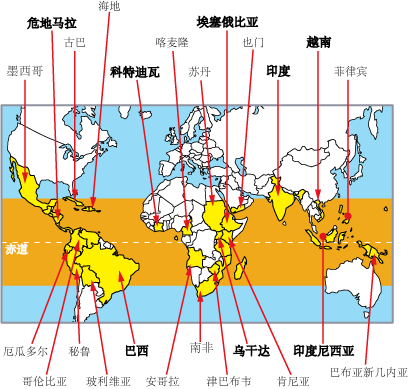
The characteristics of Arabica beans coffee producer reunion coffee beans reunion
Reunion is no longer the hometown of bourbon Arabica coffee beans. In 1715, the first coffee trees (about 40) were transported from the Yemeni port of Moka to La Runion, but unfortunately only two survived. By 1719, coffee plantations had begun to flourish and the first coffee beans were sold. Over the next few years, the government adopted a rigid measure: no matter whether the island's residents were black or black.

The hometown of bourbon Arabica coffee beans, reunion coffee beans in Yemen
Is no longer the hometown of bourbon Arabica coffee beans. In 1715, the first coffee trees (about 40) were transported from the Yemeni port of Moka to LaRunion, but unfortunately only two survived. By 1719, coffee plantations had begun to flourish and the first coffee beans were sold. Over the next few years, the government took a hard measure: the islanders, whether black or white,
La Reunion Reunion, a coffee producer in the world
Is no longer the hometown of bourbon Arabica coffee beans. In 1715, the first coffee trees (about 40) were transported from the Yemeni port of Moka to La Runion, but unfortunately only two survived. By 1719, coffee plantations had begun to flourish and the first coffee beans were sold. Over the next few years, the government took a hard measure: the islanders, whether black or white, had to
The hometown of bourbon Arabica coffee beans, Reunion.
Is no longer the hometown of bourbon Arabica coffee beans. In 1715, the first coffee trees (about 40) were transported from the Yemeni port of Moka to La Runion, but unfortunately only two survived. By 1719, coffee plantations had begun to flourish and the first coffee beans were sold. Over the next few years, the government took a hard measure: the islanders, whether black or white, had to
Starting with Coffee beans (45)-Asia-Reunion
Is no longer the hometown of bourbon Arabica coffee beans. In 1715, the first coffee trees (about 40) were transported from the Yemeni port of Moka to La Runion, but unfortunately only two survived. By 1719, coffee plantations had begun to flourish and the first coffee beans were sold. Over the next few years, the government took a hard measure: the islanders, whether black or white, had to
Reunion is no longer the hometown of bourbon Arabica coffee beans.
Is no longer the hometown of bourbon Arabica coffee beans. In 1715, the first coffee trees (about 40) were transported from the Yemeni port of Moka to LaRunion, but unfortunately only two survived. By 1719, coffee plantations had begun to flourish and the first coffee beans were sold. Over the next few years, the government took a hard measure: the islanders, whether black or white,
The technique of growing small Coffee-- integral pruning
Cultivation technique of small-grain coffee: integral pruning. Single trunk plastic surgery is a method of cultivating a trunk, using the primary branch as the backbone branch and the secondary and tertiary branches as the main fruiting branch.
Coffee beans Asian Reunion
No longer home to bourbon arabica beans. In 1715, the first coffee trees (about 40) were transported from Mocha port in Yemen to La Runion, but unfortunately only two survived. By 1719, coffee plantations were flourishing and the first coffee beans were sold. In the years that followed, the government adopted a rigid measure: every inhabitant of the island, black or white, had to

The growth process from Coffee Tree to Coffee Bean
Coffee tree, a perennial evergreen shrub or small tree of Rubiaceae, is a horticultural perennial cash crop with the characteristics of fast growth, high yield, high value and wide market. Wild coffee trees can grow to a height of 5 to 10 meters, but coffee trees planted on the manor are often cut to less than 2 meters in order to increase their fruit and facilitate harvesting. The opposite leaves of coffee trees are long oval.

The process of picking from Coffee Tree to Coffee Fruit and beans
Coffee Tree introduction in fact, the Arabs began to grow coffee in 525 BC, and chewing fried coffee beans became popular in the Arab region. In 890 AD, Arab merchants sold coffee beans to Yemen, and Yemenis made coffee beans into drinks for the first time. In the 15th century, coffee was introduced into Europe, Asia and soon into America. By the 18th century, the global tropics and subfever
Cultivation and cultivation of High-quality Coffee
(1) Seedling propagation Coffee seedling propagation can be divided into seed propagation and asexual reproduction. 1. Seed propagation (1) seed collection, seed washing and seed storage during the full ripening period of coffee (the full ripening period of medium-grain coffee in Hainan Island is from February to March, and that of small seed is from September to November). The fully ripe fruits are picked from strong and high-yielding mother trees to make seeds. Immediately after the fruit is harvested, peel and wash the seeds. The method is to place the fruit.
It is no longer the hometown of bourbon Arabian coffee beans, Reunion.
Is no longer the hometown of bourbon Arabica coffee beans. In 1715, the first coffee trees (about 40) were transported from the Yemeni port of Moka to La Runion, but unfortunately only two survived. By 1719, coffee plantations had begun to flourish and the first coffee beans were sold. Over the next few years, the government took a hard measure: the islanders, whether black or white, had to
Brief introduction of Coffee knowledge Coffee Tree species
MARAGOGYPE [Marijib] MARAGOGYPE is pictographic soybean-[elephant bean] in text. First discovered in 1870, it may have originated in southern Africa [Mozambique or Angola]. When introduced to Brazil, it was widely cultivated because of its popularity. Because it belongs to soybeans and crispy tissue, it provides sour, sweet and fragrant, all excellent
Basic knowledge of boutique coffee the growth of coffee trees
The growth and fruit of coffee trees varies with different varieties / environmental conditions. In the high altitude area of Yunnan, the small seed coffee cultivated has the advantages of cold climate, large cloud cover, short light and slow plant growth, but the branches develop into sturdy backbone branches after the first branch bears fruit, and the second / third branch has strong ability to produce. The growth is exuberant and the fruit is dense, which is the main fruiting branch, so it is suitable to adopt single trunk shaping. Two / three
About coffee trees to coffee
Coffee is a perennial evergreen shrub or small tree of Rubiaceae. It is a horticultural perennial cash crop with the characteristics of fast growth, high yield, high value and wide market. Wild coffee trees can grow to 5 to 10 meters high, but coffee trees planted on manors, in order to increase fruit and facilitate harvesting, are often cut to a height of less than 2 meters. The first flowering period of coffee trees is about three years old.
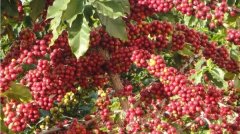
The generating environment of coffee trees
In botany, coffee trees belong to the evergreen trees of the subgenus Rubiaceae, and coffee beans, commonly known as coffee beans, are actually the seeds of the fruit of coffee trees, just because they are shaped like beans.
Sharing of planting techniques of Coffee trees
1. Cultivate strong coffee seedlings. 1. the choice of nursery land is close to water source, convenient for transportation, loam or sandy loam with loose and fertile soil, deep soil layer and good drainage, paddy field with PH value of 66.5 or early nursery land, and close to coffee garden. Turn over the depth of the ground by 0.200. 30 meters, after hoing and removing stones, the ridge soil moisture is 1.01.2 meters wide. 2 meters, about 10 meters long, and apply rotten and finely crushed soil moisture